
Unmute
Mental health in many African societies is still weighed down by stigma and silence, often misunderstood or dismissed entirely. For young people especially, this silence can be isolating and dangerous. Unmute was created to change that. It’s a culturally-aware mental health app designed to give African youth a safe space to be seen, heard, and supported with real tools, licensed professionals, and a digital community that understands them. This case study explores how I used empathy, research, and intentional design to create a product that not only works, but truly connects.

Category
Service
time line
live project
The Challenge
Across Africa, mental health remains a deeply taboo subject. Cultural beliefs often equate emotional distress with weakness, spiritual failing, or “things you just don’t talk about.” As a result, young people already navigating exams, unemployment, social change, and the aftermath of COVID, feel isolated, ashamed, and ill-equipped to seek help.
So the challenge wasn’t just to design an app, but to build a sense of care, safety, dignity, and possibility into every interaction.
Understanding the users
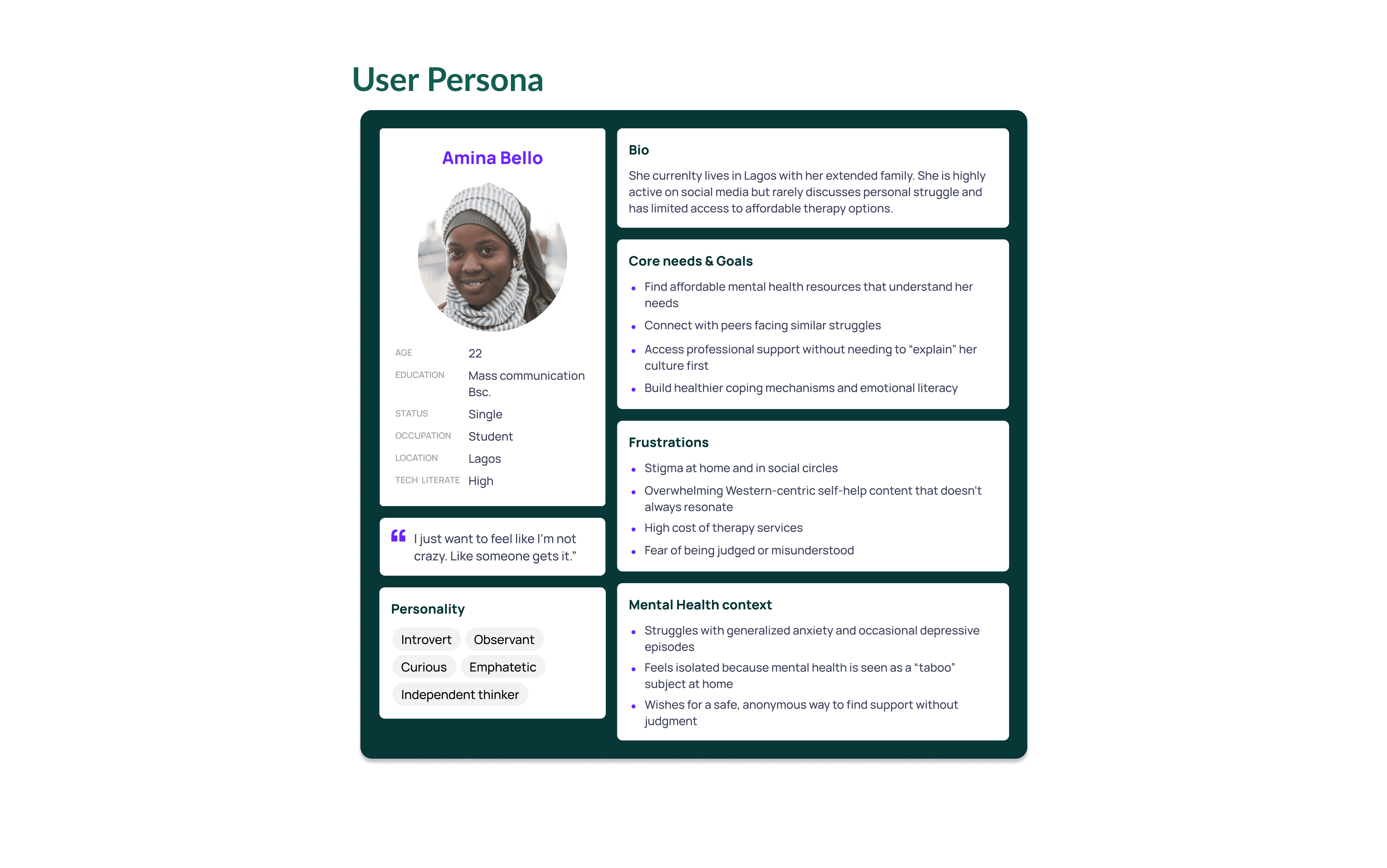
To design something that truly resonates, I needed to understand not just the problem, but the people living it. I interviewed university students, recent graduates, and young professionals from across Nigeria and Ghana, many of whom had experienced anxiety, burnout, or depression in silence. Through one-on-one interviews and surveys, we uncovered the fears, needs, and realities shaping how young Africans navigate their mental health. Click here for my interview guide
We discovered:
“No one talks about it.” Most users said they didn’t feel safe discussing mental health not at home, not with friends, and definitely not in public.
Trust is everything. Users wanted a platform that felt human, discreet, and judgment-freeespecially when dealing with something as personal as mental health.
Phones are lifelines. Many young people already use their phones to self-soothe (music, journaling, social media), making a mobile-first solution ideal.
Cost is a blocker. Even those who were open to therapy couldn’t afford it. A paywall = a dead end.
Design Goal
The goal was clear: create a mental health app that truly serves African youth and not just in concept, but in context. Every design decision needed to reflect their reality, culture, and emotional needs. so the following guided the process
Cultural Sensitivity: Build a space that feels familiar, safe, and stigma-free—not cold or clinical.
Emotional Support Meets Real Help: Combine daily wellness tools with access to licensed therapists and crisis resources.
Affordability & Access: Offer core features for free, while keeping premium care low-cost and accessible.
Youth-Friendly UX: Use warm visuals, conversational language, and intuitive navigation to feel less like a medical tool, and more like a trusted friend.
Privacy & Trust: Prioritize discretion and user safety, especially in environments where mental health conversations can be risky.
Check out Behance for more detailed casestudy

Designing for impact and longevity
While Unmute began as a passion project to tackle mental health stigma, it also had to function in the real world. To reach youth at scale, the app needed a model that was both accessible, sustainable and something to maintain retention. so we implemented
A 7 day Fremium model
Gentle paywall strategy
Accesibility to community forum and journal without payment
Partnership with various institution and NGO to mitigate cost and business risks
Impact and Reflection on this project
Designing Unmute taught me that creating for emotional impact is as much about listening as it is about building, This project challenged me to think beyond features and flows—to design for feelings, fears, and fragile hopes.
It reminded me that real impact happens when we design with people, not just for them.
Things i learned from this project:
Designing for stigma requires deep cultural sensitivity, not assumptions.
Youth-centered mental health solutions must balance empathy with realistic engagement strategies.
Business sustainability matters even in deeply emotional spaces—especially when scaling access and trust are critical.
User feedback during prototype testing confirmed the importance of gentle onboarding, culturally relevant visuals, and easy, stigma-free access to real support.
Mentors and peer reviewers highlighted the thoughtful balance between mission and market, praising the layered approach to both healing and growth.


Next steps
Unmute is still a work in progress on its way to becoming a reality.
As the project moves forward, the next steps include:
Conducting more user interviews and usability testing across diverse African youth demographics to refine accessibility, language, and trust-building strategies.
Iterating on the onboarding experience and payment transition flow to ensure emotional sensitivity without compromising sustainability.

